

A Guide to Direct to Consumer Lab Testing
Ever wondered if you could just order your own lab tests without the hassle of a doctor’s appointment? That’s exactly what direct-to-consumer lab testing is all about. It’s a straightforward approach that lets you order specific health tests online, collect a sample (often right from your own home), and get your results sent directly to you.
This simple shift puts you in charge of your own health information, changing the way we think about and interact with our personal wellness.
How DTC Testing Puts You in the Driver’s Seat
Think of it like ordering a custom meal directly from the chef instead of being stuck with a limited set menu. That’s the essence of direct-to-consumer lab testing. It cuts out the traditional middlemen—like mandatory doctor visits and insurance approvals—that have historically stood between you and your own health data.
The whole model is built on one simple idea: you should have direct access to information about your own body. So, instead of waiting for your annual physical to look into a nagging concern, you can proactively order a test for things like vitamin levels, hormone imbalances, or food sensitivities whenever you feel the need.
The Rise of a New Health Model
The massive growth in this area shows a real change in how people want to manage their health. The global direct-to-consumer laboratory testing market was recently valued at around USD 4.45 billion and is expected to jump to USD 5.79 billion. That’s a staggering compound annual growth rate of 30.2% in just one year, fueled by a collective desire for more control. You can learn more about the forces driving this market expansion.
The fundamental difference isn’t just about convenience; it’s a transfer of control. Direct-to-consumer lab testing gives individuals the tools to monitor their health on their own terms, fostering a more engaged and preventative mindset.
This new path is a world away from the old routine of scheduling appointments, chasing down referrals, and deciphering insurance paperwork. It’s a simple, online process.
To really see the difference, let’s compare the two models side-by-side.
Traditional vs Direct to Consumer Lab Testing
The table below breaks down the key differences between the old way of getting lab work done and the modern direct-to-consumer approach. Pay attention to how access, speed, and cost are handled in each system.
| Feature | Traditional Lab Testing | Direct to Consumer (DTC) Lab Testing |
|---|---|---|
| Access | Requires a doctor’s visit and referral. | Order online anytime without a referral. |
| Speed | Can take weeks due to appointments and processing. | Results often delivered in 1-3 business days. |
| Cost | Often unpredictable with insurance co-pays and fees. | Transparent, upfront pricing with no hidden costs. |
| Control | Doctor-led; patient is a passive recipient. | Patient-led; you choose the tests and own the data. |
As you can see, the DTC model is designed from the ground up to be faster, more transparent, and centered around you, the patient. It’s a significant move toward a more empowered approach to personal health.
The Real-World Benefits of At-Home Testing

The move toward direct-to-consumer lab testing isn’t just a fleeting trend. It’s a very real solution to the pressures of modern life. People are embracing at-home tests for tangible benefits that respect their schedules, budgets, and personal boundaries. It’s about making healthcare fit into your world, not the other way around.
Think about it. You need to check your cholesterol, but squeezing a doctor’s visit into a packed work week feels impossible. With an at-home test, you can collect your sample on a Saturday morning right from your kitchen table. This incredible convenience is a huge draw, completely sidestepping the hassle of appointments, traffic, and crowded waiting rooms.
A New Standard of Privacy and Empowerment
It goes deeper than just convenience, though. These tests provide a level of privacy that many people find essential. You can manage sensitive health issues—whether they’re hormonal, sexual, or related to a chronic condition—with total discretion. The kit shows up in a plain box, and your secure results are sent directly and only to you. You’re in charge.
This direct access is also incredibly empowering. Why wait for your yearly physical to investigate a nagging symptom or a new health goal? You can take action now. This changes the entire dynamic from passively waiting to get sick to proactively managing your wellness.
Having direct access to your personal health data enables you to track wellness trends, monitor conditions, and make informed lifestyle choices without needing to schedule a doctor’s visit first. It’s about moving from being a passenger to being the pilot of your own health journey.
Financial Clarity and Proactive Health Tracking
One of the biggest reliefs for many is transparent pricing. We’ve all been there—the confusing world of co-pays, deductibles, and surprise bills that show up weeks after a lab visit. With at-home tests, you know the exact cost upfront. No games, no hidden fees.
This freedom, both financially and logistically, makes consistent health monitoring a reality. For instance, you could:
- Track Chronic Conditions: Keep a close eye on markers like HbA1c for diabetes or check your thyroid panel for hormone management, all on a schedule that works for you.
- Optimize Your Wellness: Use real data to see what’s working. Checking key vitamin levels can show you exactly how to adjust your diet for better energy. To see what’s possible, check out Savon Labs’ range of nutrition tests.
- Investigate Specific Concerns: Finally get answers about those nagging food sensitivities or hormone imbalances without putting it off any longer.
The market’s explosive growth proves how valuable this is to people. Projections show the global market is on track to hit an incredible USD 133.23 billion by 2034. This isn’t just a fad; it’s a powerful shift toward healthcare that’s more accessible and puts you in control.
Your Step-by-Step Guide to the Testing Process
Getting a lab test done yourself might sound complicated, but it’s actually designed to be as simple as ordering anything else online. The old days of confusing paperwork, appointment juggling, and long waits are gone. This modern approach is all about clear, simple steps that put you in the driver’s seat from beginning to end.
Ready to see how it works? Let’s walk through the entire journey together. We’ll break down each stage so you know exactly what to expect, from choosing your test to making sense of your results.
Step 1: Ordering Your Test Online
It all starts on a website, just like any other shopping experience. You can browse a whole menu of tests covering everything from vitamin levels to hormone health. Find the one that fits your wellness goals, add it to your cart, and check out.
The best part? It’s completely private. No doctor’s referral or insurance pre-approval is required. Once you place your order, a collection kit is shipped right to your door in discreet packaging, keeping your health choices confidential.
Step 2: Receiving and Preparing Your Kit
When your kit arrives, open it up and get familiar with the contents. You’ll find everything you need to collect your sample: detailed instructions, the necessary tools (like a lancet for a finger-prick test or a tube for saliva), and a prepaid mailer to send it back.
Before you do anything else, you’ll need to register your kit online with the unique code found inside. This is a critical step. It securely connects your physical sample to your private online account, making sure your results go to you and you alone.
Step 3: Collecting and Mailing Your Sample
This is where the “at-home” part happens. Following the instructions carefully is the most important thing you can do to get an accurate result. For many tests, this means a simple finger-prick blood sample or a saliva collection. The goal is to provide a clean, viable sample for the lab to analyze.
Pro Tip: If you’re doing a blood spot test, try warming your hands for a few minutes first. It really helps get the blood flowing and makes collection much easier. For any tests requiring fasting, stick to the time guidelines precisely—it’s the only way to get a true snapshot of your body’s baseline.
After you’ve collected your sample, you’ll pack it up in the provided materials and send it off using the prepaid shipping label. From your mailbox, it goes straight to a certified lab for processing.
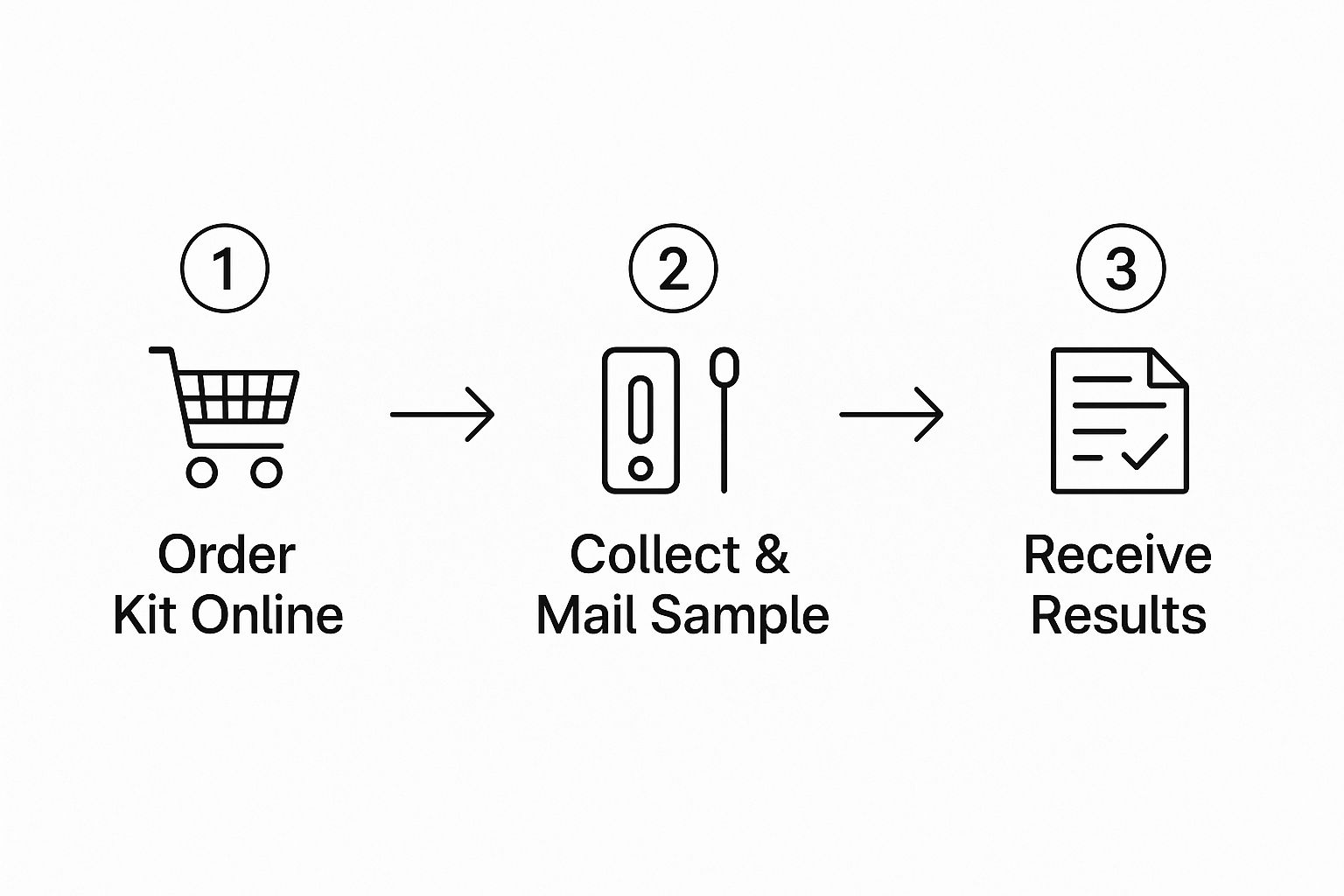
As the image shows, the entire process really boils down to three simple actions: order, collect, and get your results. It’s designed for convenience.
Step 4: Receiving and Understanding Your Results
Once the lab has finished its work—which usually only takes 1 to 3 business days—you’ll get an email letting you know your results are in. Simply log into your secure account portal to see your personalized report.
A good testing company won’t just throw numbers at you. They present your data in a clear, easy-to-read format that often includes:
- Your specific levels for every biomarker tested.
- The optimal reference ranges so you have a baseline for comparison.
- Plain-language explanations of what each biomarker indicates about your health.
This turns vague health questions into concrete, actionable data. And, of course, it’s always a good idea to share any results that concern you with your doctor or another trusted healthcare provider.
What Can You Actually Test For at Home? A Look at Common DTC Tests

The world of direct-to-consumer lab testing has grown enormously. It’s no longer just about checking your Vitamin D levels; you can now investigate almost any facet of your health right from your living room. This incredible variety means there’s likely a test designed to answer your specific wellness questions or help you reach a particular health goal.
Of course, with so many options, it’s easy to feel a bit lost. Let’s simplify things by breaking down the most common tests into a few key categories. This will help you zero in on what makes sense for your personal health journey, whether you’re trying to dial in your nutrition, keep an eye on a chronic condition, or get to the bottom of a nagging symptom.
H3: General Wellness and Nutrition
This is the gateway for most people new to at-home testing. Think of these as a foundational snapshot of your body’s core functions and nutritional status. They’re perfect if you’re looking to optimize your diet, figure out why you’re so tired, or just get a baseline understanding of your body’s unique chemistry.
Some of the most popular tests here include:
- Vitamin Panels: These check for crucial nutrients like Vitamin D, B12, and Magnesium. Deficiencies in these are incredibly common and can impact everything from your energy and mood to your immune response.
- Food Sensitivity Tests: If you suspect certain foods are causing digestive upset or inflammation, these tests can help you pinpoint potential culprits and make informed changes to your diet.
- Metabolism Tests: Curious about how your body burns energy? These tests offer insights that can be a game-changer for anyone with weight management goals.
H3: Hormonal Health
Hormones are the body’s powerful chemical messengers, orchestrating everything from your mood and metabolism to your sleep and reproductive health. When they’re out of balance, even slightly, you can definitely feel it. At-home testing provides a private and proactive way to see what’s going on.
For instance, someone dealing with unexplained fatigue, weight gain, and brain fog might order a thyroid panel. Savon Labs offers a variety of at-home thyroid tests that measure key markers like TSH, T3, and T4, giving you a clear window into your thyroid function. Other common tests look at cortisol (the “stress hormone”), testosterone, and estrogen.
By measuring specific biomarkers, you can turn vague feelings of “not being right” into concrete data. This information is the first step toward making targeted lifestyle changes or having a more productive conversation with your doctor.
H3: Chronic Conditions and Infectious Diseases
For anyone managing an ongoing health condition, DTC testing is a powerful tool. It offers a convenient way to monitor key health markers between doctor appointments, giving you more control and a steady stream of data without constant trips to a lab.
A few key examples are:
- HbA1c Tests: Essential for anyone with diabetes or pre-diabetes to monitor long-term blood sugar control.
- Cholesterol Panels: Help you track HDL, LDL, and triglycerides to stay on top of your cardiovascular risk.
- STI Screening: A completely private and accessible way to test for common sexually transmitted infections.
- Respiratory Virus Panels: Lets you quickly check for things like influenza or COVID-19 from home.
This kind of regular insight empowers you to become a true partner in your own healthcare, filling in the gaps between appointments with valuable, real-time information.
The range of available tests is truly impressive. From general health overviews to highly specific panels, you can find a test that aligns with nearly any health concern or curiosity you might have.
Here’s a quick table to summarize some of the most popular categories.
Popular Categories of DTC Lab Tests
| Test Category | Common Tests Included | Primary Use Case |
|---|---|---|
| General Wellness | Vitamin D, B12, Complete Blood Count (CBC) | Establishing a baseline of overall health and identifying nutritional gaps. |
| Hormone Health | Thyroid Panel (TSH, T3, T4), Cortisol, Testosterone | Investigating symptoms like fatigue, mood swings, or metabolic changes. |
| Heart Health | Cholesterol Panel (HDL, LDL), hs-CRP, HbA1c | Monitoring cardiovascular risk factors, especially for those with a family history. |
| Food Sensitivity | IgG Food Panels | Identifying potential food triggers for inflammation, bloating, or skin issues. |
| Sexual Health | STI Panels (Chlamydia, Gonorrhea, etc.), HPV | Discreet and accessible screening for sexually transmitted infections. |
This overview just scratches the surface, but it illustrates how you can use at-home testing to gain specific, actionable insights into your body’s inner workings.
What to Know Before You Buy a Test
Having direct access to your own health data is a game-changer. But with this new power comes the responsibility to be a savvy consumer. Before you add that test to your cart, it’s smart to pause and consider a few things to make sure you’re getting value and, more importantly, accurate information.
Think about it like this: you wouldn’t buy a car without checking its safety ratings or taking it for a test drive. The same principle applies here. Vetting the company and understanding what you’re buying ensures you can use these incredible tools wisely.
Lab Quality and Certification
This is the big one. The single most crucial factor is the quality of the laboratory that will actually process your sample. The best DTC companies don’t cut corners here; they partner with labs that meet the highest industry standards. The gold standard to look for is CLIA certification.
What is CLIA? It stands for Clinical Laboratory Improvement Amendments. These are federal regulations that guarantee a lab’s tests are accurate, reliable, and timely. A CLIA-certified lab is held to the same rigorous quality standards as the labs your doctor or local hospital uses.
Always check that the company you’re buying from is transparent about using CLIA-certified labs. It’s your number one guarantee that your results will be trustworthy. Some labs also have CAP (College of American Pathologists) accreditation, which is another great sign of top-tier quality.
Making Sense of Your Results
Getting a report filled with numbers and medical terms can feel a little intimidating at first. While these tests are fantastic for gathering data, they aren’t meant to replace a doctor’s diagnosis. Your results are a snapshot of specific biomarkers at a single moment in time—they don’t tell the complete story of your health.
This is why it’s so important to review any results, especially those that are out of the normal range, with a healthcare professional. They can put the numbers into context with your unique health history, lifestyle, and any symptoms you might have. This collaboration helps you make informed decisions, not anxious ones. For example, learning your vitamin D is low is one thing, but understanding what to do about it is the next step. Our guide on the 6 reasons to have your vitamin levels checked can help you see how this data becomes actionable.
The direct to consumer lab testing market has exploded, with North America driving nearly half of all global revenue. Even with some gray areas in how these tests are advertised, people are clearly hungry for more ownership over their health information. This trend is part of a much larger movement toward personal health empowerment.
Of course. Here is the rewritten section, designed to sound natural and expert-driven.
Your Questions About DTC Testing, Answered
Jumping into something new with your health is bound to bring up a few questions. As direct-to-consumer lab testing becomes a more familiar part of our lives, getting clear, honest answers is key. Let’s walk through some of the most common things people ask, so you can move forward feeling informed and confident.
Think of this as a way to gather more intelligence for your health journey, not as a replacement for your doctor. It’s like having a detailed map before a road trip—it doesn’t replace the driver, but it sure helps you navigate with a lot more insight.
Are At-Home Lab Tests As Accurate As The Ones My Doctor Orders?
This is probably the most important question people have, and for good reason. The short answer is yes—the actual lab analysis is just as accurate.
Reputable companies, including Savon Labs, partner with the very same CLIA-certified and CAP-accredited labs that your local hospital or clinic uses. This means your sample is analyzed by certified professionals using top-tier equipment, all held to the strictest federal standards for quality and precision.
So, where’s the difference? It really comes down to collecting the sample. A professional phlebotomist has the process down to a science, which minimizes any chance for error. That said, at-home kits are designed from the ground up to be user-friendly, with step-by-step instructions that make getting a good sample as straightforward as possible.
When choosing a test, always look for a company that’s upfront about their lab certifications. The most important thing you can do is follow the collection instructions to the letter. If you ever get a result that seems off, the best move is always to double-check it with a test through your doctor.
I Have My Results—Now What?
Getting your results is the starting line, not the finish line. First, take a moment to really read through the report. A good one will clearly show your biomarker levels, compare them to the standard reference ranges, and give you some real-world context for what it all means.
For everyday wellness goals, this information can be incredibly empowering. For example:
- Low Vitamin D: This could be a nudge to spend a bit more time in the sun or talk to your doctor about a supplement.
- High Cholesterol: Seeing that number might be the catalyst you need to embrace a more heart-healthy diet and get moving.
- Food Sensitivity Markers: These can be your guide for an elimination diet, helping you finally figure out what’s causing that nagging bloating or inflammation.
But—and this is important—if any result is significantly outside the normal range or you’re dealing with an ongoing health issue, it’s time to bring in an expert. Share your report with your doctor or another healthcare professional. They have the expertise to place these numbers within the bigger picture of your health history and guide you on what to do next.
How Do I Know My Health Data Is Private and Secure?
In healthcare, privacy isn’t just a feature; it’s a fundamental right. Any legitimate DTC testing company knows this and takes it very seriously. Most are bound by strict privacy laws like the Health Insurance Portability and Accountability Act (HIPAA), which is the federal gold standard for protecting your sensitive health information.
Before you buy a test, do a quick check of the company’s privacy policy—it should be easy to find and written in plain English. You want to see commitments to using encryption for your data and clear language stating they will never sell or share your personal health information without your explicit consent.
A Pew Research Center study found that 67% of consumers are concerned about how companies use their genetic data, so you’re not alone in thinking about this. The best way to protect yourself is to go with an established company that has a clear and strong privacy policy. It’s the best way to ensure your information stays exactly where it should: with you.
Ready to take control of your health with confidence? Savon Labs provides a simple, secure, and affordable path to getting the answers you’ve been looking for. Explore our wide range of tests and start your wellness journey today. Learn more at SavonLabs.com.